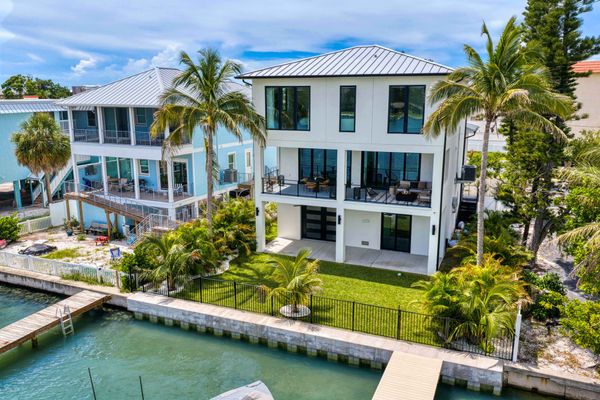
What Your Waterfront Home Is Actually Worth in St. Pete
You looked up your house on Zillow. The number is wrong. What actually sets the price on a waterfront home in St. Pete, from someone who prices them.
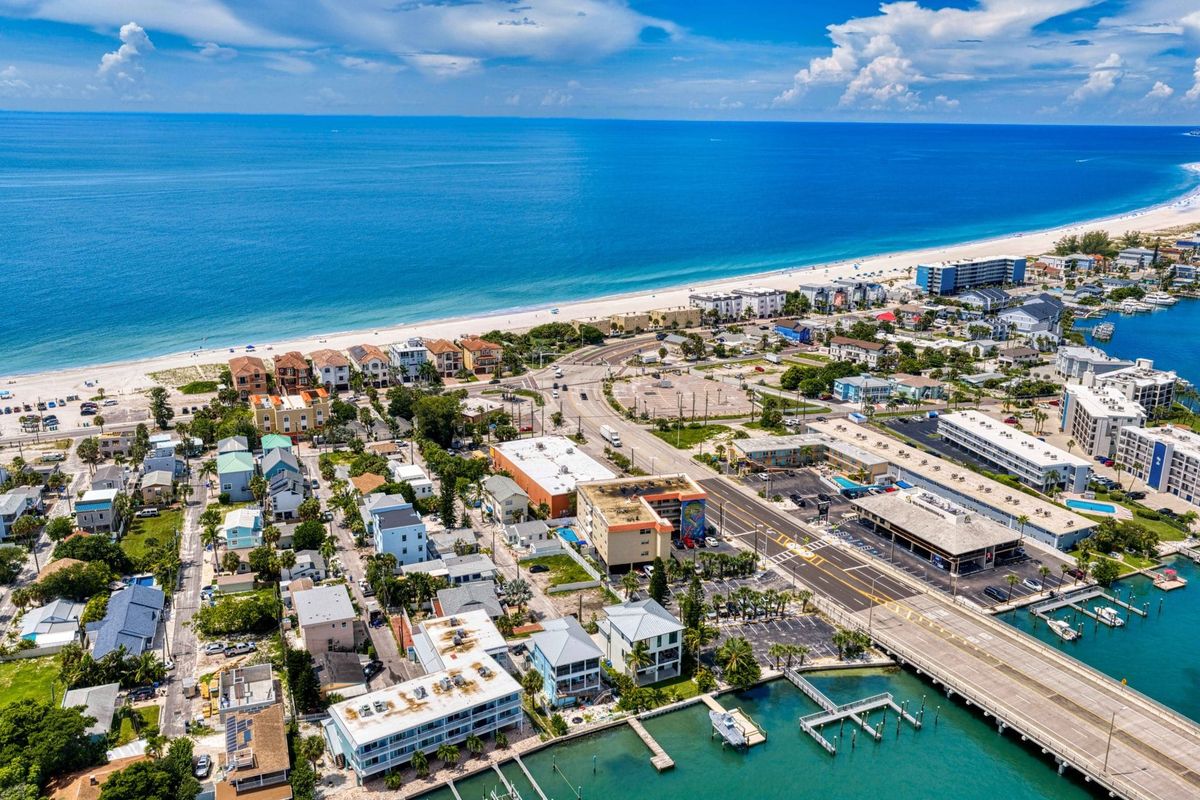

About the Author
Carly Majorana
Waterfront and luxury real estate specialist at NextHome Gulf Coast in St. Petersburg, Florida. CLHMS Guild Member. Specializing in the technical side of waterfront — seawalls, boat lifts, bridge clearance, and flood zones. Serving buyers and sellers in St. Pete Beach, Tierra Verde, Treasure Island, St. Petersburg, Bayway Isles, and Pinellas Point.
You looked up your house on Zillow. The number is wrong.
Not always wrong in your favor, either. I've sat at kitchen tables with sellers who were sure their house was worth $400,000 more than it was, and I've sat with sellers who had no idea they were about to leave $200,000 on the table. Same reason both times. The computer doesn't know what it's looking at when the lot ends in water.
Here is how waterfront homes in St. Pete, Treasure Island, St. Pete Beach and Tierra Verde actually get priced, what the automated estimates miss, and the two things sellers assume that cost them at the table.
Why is the Zestimate wrong on a waterfront home?
Because it comps you against the wrong houses.
The algorithm pulls recent sales nearby with similar square footage and bedroom count. On a regular neighborhood street that works fine. On the water it falls apart, because the house two doors down with the same floor plan can be worth $300,000 more or less depending on things the algorithm can't see. Depth at the dock. Whether there's a bridge between you and the Gulf. Whether the seawall has five years left or thirty.
The computers are getting better at single-family waterfront. I'll give them that. But they still get lumped in with the house across the street that isn't on the water, and they still have no idea what happened to a house in the last two years.
Post-hurricane, the estimates are worse than they used to be, not better. Zillow does not know which house on your street has flooded three times. It doesn't know if the one that sold in March had drywall in it or was a shell with a lockbox. It just sees a sale price and a square footage and does math. If your neighbor sold a gutted house for land value, that number is now in your comp set.
Sellers do the same thing in reverse, by the way. I've had people compare their non-waterfront house to the waterfront sales around the corner because they're "in the same neighborhood." The neighborhood is not what the buyer is paying for.
Where the estimates really fall apart is condos
I own a condo in a building where some units have a water view, a boat lift and a garage. Some have one of those. Some have none. The algorithm treats them as the same building, because they are.
Right now in my building, a unit with no view, no lift and no garage sells in the $330,000 range. A unit with all three sells in the $600,000s. Nearly double, same building, same square footage. And the automated estimate for the $600,000 unit comes back somewhere in the middle, because it's averaging it against units that are missing the three things that make it worth $600,000.
If you own the unit with all three and you price off the Zestimate, you just gave away a couple hundred thousand dollars to be efficient.
What actually moves the number on a waterfront sale
This is the list I work through on every listing before I say a price out loud. None of it is on the MLS sheet and almost none of it is in an automated estimate.
- What kind of water. Gulf front, open bay, wide canal, narrow canal and a finger canal are five different price categories that all get called "waterfront." A Gulf-front house in Pass-a-Grille, an open-bay lot in Bayway Isles, a wide canal in Snell Isle or Isle of Palms, and a protected canal in Vina del Mar do not comp against each other, no matter what the algorithm thinks.
- Which part of the beach you're actually in. Pass-a-Grille is technically St. Pete Beach. Nobody prices it like St. Pete Beach. A house below the Don CeSar sells on a different scale than the same house on the north end, and the automated estimate pulls comps across the whole city because the mailing address says St. Pete Beach. Same thing happens with the small named neighborhoods on Treasure Island. If you're in one of the pockets people specifically ask for, your comps are the pocket, not the zip code.
- Bridges between you and open water. No fixed bridges is a premium. A low fixed bridge caps the boat a buyer can keep behind the house, which caps the buyer pool, which caps the price.
- Depth at mean low tide. A dock that's dry at low tide is a deck. Buyers with a real boat check this before they check the kitchen.
- The lift. Capacity, age and whether it actually runs today. More on this below.
- Seawall age and condition. A replacement runs $30,000 to $100,000 or more depending on footage. A buyer who spots a bad wall is going to price it in whether you did or not.
- Elevation and flood history. Is the house elevated, what's the finished floor elevation, has it taken water, and can you prove either answer. An elevation certificate and an insurance quote in hand change a buyer's math immediately.
- Insurability. What flood and wind actually cost on this specific house. Buyers at $2M and up ask for the number. If you can't give them one, they'll assume a bad one.
- What you're actually looking at. A peek-a-boo slice of water between two houses and a wide open bay view are not the same product. If your living room looks directly at a high-rise condo, that's a different product too. Mangroves you can't trim, a marina next door, a canal that takes every wake from the ICW. Buyers notice on the first walkthrough.
- Privacy and canal width. Whether your neighbors across the canal can see what you're having for dinner matters more than people expect. A wide canal where the house across from you is a hundred feet away prices differently than a narrow one where you could hand them the salt.
- How much work the buyer has to do. Right now people are paying a real premium for move-in ready. Zero work, not "just needs paint." If your house is truly done, you can price for it. If it's not, a buyer who's going to redo it is going to price in the work, plus a hassle fee.
Two houses can have the same bed and bath count and land on opposite ends of that list. That is the whole reason waterfront on the same street sells for $300,000 apart.
The two assumptions that cost sellers money
"It's a newer house, it'll pass the four-point." The four-point inspection is roof, electrical, plumbing and HVAC, and the buyer's insurance company requires it. Newer doesn't mean it passes. I've had sellers with a house built in the last fifteen years find out at the inspection that something flagged, and now the buyer's insurance is in question, and now the whole deal is in question. For a few hundred dollars you can run your own four-point before you list and fix whatever shows up on your schedule instead of the buyer's.
"The boat lift works." Does it, though? When did you last run it up and down with a boat on it? I watched a seller get the entire cost of a new lift deducted from their price over a small electrical issue and cables that needed greasing. A lift service call is a few hundred dollars. A replacement lift is $10,000 to $25,000 depending on capacity, more if the pilings are involved. When the buyer's inspector pushes the button and nothing happens, nobody negotiates for the small fix. They negotiate for the whole thing.
Same logic applies to the dock, the seawall cap, the davits, the fish-cleaning station sink that hasn't had water in it since 2019. Anything on the water side of the house that a buyer can test, test it first.
How I market a waterfront listing differently
A traditional brokers' open is agents eating sandwiches in your kitchen. For a waterfront listing I run a listing caravan by boat instead. The high-end waterfront agents in St. Pete and the beaches pull up to your dock, walk the house, and film and post it to their own buyer audiences. They see the approach, the depth, the turning room and the view from the water, which is the view your buyer is actually buying.
It also puts the house in front of the agents who already have the $4M boat buyer in their phone, instead of waiting for that buyer to find the listing on their own.
What to do before you call anyone
If you're thinking about selling a waterfront home in the next year, do this first. It's cheap and it changes the conversation.
- Run the lift with your boat on it. Grease the cables. Fix the small stuff now.
- Get your own four-point inspection.
- Dig out your elevation certificate, or order one.
- Get a current flood and wind quote so you can hand a buyer a number.
- Have the seawall looked at if it's over 20 years old or you've never had it inspected.
- Know your depth at the dock at low tide. Actually measure it.
Then ask someone who boats this water what the house is worth. Not what the house next door sold for. What yours is worth, with its bridges, its depth, its lift and its wall. If you want that number from me, reach out here. No pitch, I'll just tell you.
Frequently asked questions
Why is my Zestimate so far off on my waterfront home?
Automated estimates comp your home against nearby sales with similar square footage, including non-waterfront homes and homes with different water access. They don't see bridge clearance, depth at low tide, seawall condition, elevation or flood history, which are the factors that actually set waterfront prices.
Are Zillow estimates accurate for waterfront condos in Florida?
Usually not. Units in the same building with a water view, boat lift and garage can sell for nearly double the units without them, and the estimate averages them together. In one St. Pete building, no-view units sell in the $330,000 range and units with view, lift and garage sell in the $600,000s.
Does a boat lift add value to a waterfront home?
Yes, if it works. A functioning lift with real capacity is a selling point. A lift that fails inspection gets the full replacement cost, $10,000 to $25,000 or more, deducted from your price even if the fix is minor.
Should I get a four-point inspection before selling my house in Florida?
Yes. The buyer's insurance company requires one, and a newer home is not guaranteed to pass. Running your own for a few hundred dollars before listing lets you fix problems on your timeline instead of during the buyer's inspection period.
What should I fix before selling a waterfront home in St. Pete?
Test the boat lift and dock, get a four-point inspection, locate your elevation certificate, get a current flood and wind insurance quote, and have the seawall inspected if it's older than 20 years. These are the items buyers check first and negotiate hardest on.
What is a listing caravan by boat?
Instead of a traditional brokers' open house, top waterfront agents arrive at the listing by boat, see the approach and depth from the water, and market the home to their own buyer audiences. It puts a waterfront home in front of the agents who already represent boat buyers.
More Waterfront Resources
- Why Two Waterfront Homes on the Same Street Sell for $300,000 Apart
- What to Know About Boat Lifts Before You Buy Waterfront in St. Petersburg
- What Does a Seawall Inspection Cost in Pinellas County?
- What Does Waterfront Home Insurance Cost in Florida After the Hurricanes?
- What to Know Before Buying a Waterfront Home in St. Pete Beach