What to Know Before Buying a Waterfront Home in St. Pete Beach
Thinking about buying a waterfront home in St. Pete Beach? The honest version: flood zones, insurance, seawalls, real boat access, and what the storms actually left behind.


Related reading: The Waterfront Rule That Turned a House Into a Lot — how the 50% Rule decides whether a storm-damaged waterfront home can be renovated or must be rebuilt.
About the Author
Carly Majorana
Waterfront and luxury real estate specialist at NextHome Gulf Coast in St. Petersburg, Florida. CLHMS Guild Member. Specializing in the technical side of waterfront — seawalls, boat lifts, bridge clearance, and flood zones. Serving buyers and sellers in St. Pete Beach, Tierra Verde, Treasure Island, St. Petersburg, Bayway Isles, and Pinellas Point.
Looking on the island? Browse current St. Pete Beach waterfront homes and what to check before you make an offer.
What to Know Before Buying a Waterfront Home in St. Pete Beach
People fall in love with St. Pete Beach in about eleven minutes. Usually somewhere between the first sandbar and the second drink. I get it — I live out here, and I still pull over for the sunsets like a tourist who has never once seen the sky.
But buying here is a different sport than vacationing here. Vacationing is a margarita and a good attitude. Buying is a flood zone, a seawall, and a number on a Citizens quote that makes you sit down. The listing photos will sell you the dream in fourteen filtered slides. They won’t tell you what flood zone you’re in, whether your “boat access” is real or technically-a-sentence, or why the house two doors down sold for $300,000 more than the one that looks just like it.
That part’s on me. So here’s the honest version.
The short version, if you’re skimming:St. Pete Beach is a barrier island — the Gulf side is for views, the bay side is for boats. They are not the same house.Most of the island sits in a high-risk flood zone. Pull the exact zone for the address before you make an offer.Insurance is the line item that kills the most deals out here. Get a real quote early.Seawalls and “boat access” are where listings quietly lie. Verify both.The storms were real — but so is the value. Buy with your eyes open and you’ll be fine.
Is St. Pete Beach Gulf-front or intracoastal — and does it matter?
Both — and the difference decides whether you get sunsets or a boat.
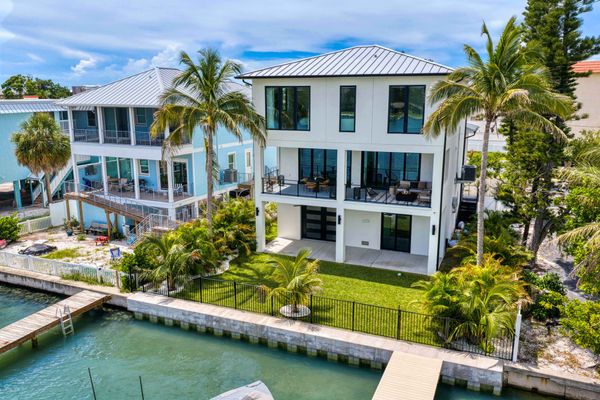
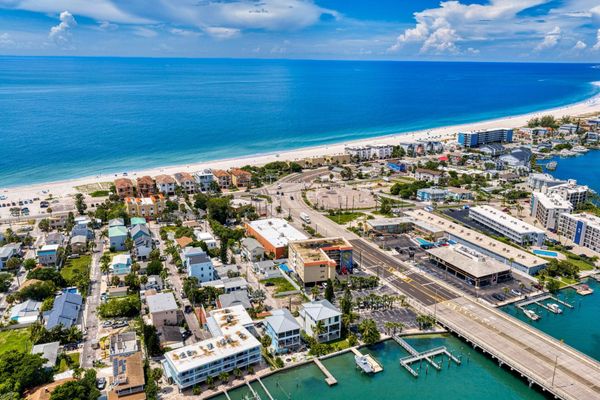
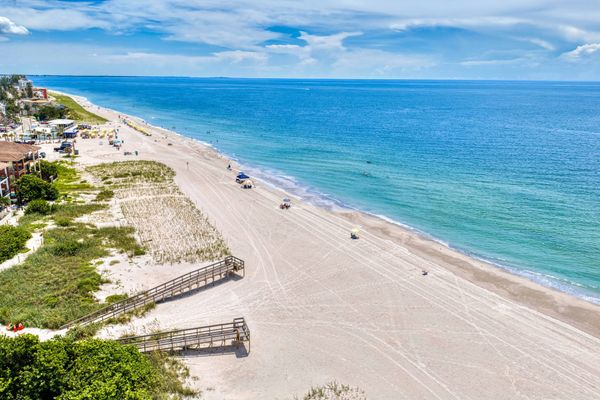
St. Pete Beach is a barrier island. Gulf on one side, intracoastal on the other, a maze of canal homes wedged in between. Gulf-front is the postcard: open water, the sunsets that ruin you for living anywhere else, waves doing wave things. What it almost never gets you is a boat in your backyard. The Gulf side is for looking at the water. The bay side is for leaving from it.
So decide what you actually want to do with all that water before you fall for a view — stare at it, or drive away on it. Those are two completely different houses at two completely different prices, and people mix them up constantly.
If a boat is the whole reason you’re moving here, you want the canal or intracoastal side — and then you want the next part, because not all of that water is created equal either. (Full breakdown: What Is “Sailboat Water” and Why Do Waterfront Buyers Care So Much?)
Can you actually keep a boat here?
Sometimes. “Boat access” in a listing means almost nothing until someone checks the actual water.
Some waterfront homes have boat access the same way a studio apartment has “room for a treadmill.” Technically true. Spiritually a stretch.
Before you believe it, somebody needs to check:
- Water depth at low tide — the dealbreaker people forget exists
- Canal width — can you actually turn the boat around?
- Bridge clearance between you and open water — a fixed bridge can quietly trap your boat in the canal forever
- Seawall and dock capacity — can it hold the boat you own, or the slightly bigger one you’ll talk yourself into within six months?
This is the part where I earn the commission. I’ve walked buyers off the ledge of a “boater’s paradise” that turns into a mud puddle at low tide, and a “deep water canal” you couldn’t get a paddleboard under at the wrong time of day. If the boat is part of the plan, send me the listing before your heart gets involved. I’ll tell you if the water’s lying. (More: What to Know About Boat Lifts Before You Buy Waterfront in St. Pete)
What flood zone is St. Pete Beach in?
Most of it sits in a high-risk coastal zone (AE or VE), and your exact zone changes block to block.
I know. Shocking news that the sandbar in the Gulf of Mexico is in a flood zone.
This shouldn’t scare you off — it should just shape your budget and stop you from being surprised later. Your exact designation drives both your insurance and what you’re allowed to do when you renovate, and it can shift from one house to the next on the same street.
So don’t guess, and don’t take the listing’s word for it. We pull the real zone for the real address before you write an offer — every time, even when you’re certain and in a hurry.
How much is waterfront insurance going to cost?
More than you think — and it’s the line item that kills the most deals out here. Quote it before you’re attached.
“Oh, it’s not that bad” is a thing people say roughly one week before it is, in fact, that bad. Insurance quietly ends more waterfront deals than bad inspections do.
What feeds the number: elevation, construction type, roof age, and flood history — which is why two houses that look identical can quote wildly differently. The move that saves people real money is getting an actual quote during your inspection window, not after you’re emotionally married to the place.
I keep the whole conversation honest, with real numbers, here: What Does Waterfront Home Insurance Cost in Florida After the Storms?
Do the seawalls actually hold up?
Replacing one runs into the tens of thousands — never buy without knowing its age and condition.
A seawall is the deeply unglamorous slab of concrete standing between your backyard and the bay. The quartz countertops will not save you when your lawn is migrating into the canal.
Before you buy, you want real eyes on that wall — an actual inspection, not the seller’s cousin squinting at it and declaring it “solid.” (What that costs: What Does a Seawall Inspection Cost in Pinellas County?)
What’s the honest downside nobody puts in the listing?
The storms. Gulf Boulevard looks untouched. The neighborhoods one block in tell a very different story.
Let’s just say it out loud, because dancing around it would be insulting and I respect you more than that.
Drive down Gulf Boulevard today and you’d swear nothing ever happened. Hotels open, restaurants packed, beach behaving exactly like it always has, every umbrella in formation. On the boulevard, the storms of 2024 read like a rumor someone made up.
Then you turn off the boulevard, and the neighborhoods quietly correct the record. Helene’s surge pushed through these barrier islands in September, Milton showed up about two weeks later like it had unfinished business, and a lot of these homes took water they’d never taken in their lives. Go a block or two in and you’ll still see it — houses gutted to the studs, dumpsters in driveways, the occasional home jacked up on a fresh foundation like it’s standing on its tiptoes hoping the Gulf doesn’t notice it next time.
It’s all being rebuilt. It’s just being rebuilt slowly — one permit, one contractor, one insurance phone call you’d rather die than make, at a time.
I’m not telling you this to talk you out of anything. I live here. I’m not leaving, and neither is the value of being on this water. I’m telling you because it changes the questions you should be asking about a specific house:
- Did it flood — and how high?
- What’s been redone since the storms?
- Was that work actually permitted?
- Is the new drywall a renovation — or a recovery wearing nice paint?
A home that’s already been through it and properly rebuilt can be a genuinely smart buy. A home that flooded and got a fast cosmetic patch is a future problem in a good outfit.
The boulevard bounced back fast because the boulevard is built to. The neighborhoods are healing at the speed real life actually moves. Knowing the difference between those two timelines — and where any given house is sitting on it — is most of my job right now.
How do you find a waterfront real estate agent who actually knows St. Pete Beach?
Short answer: find someone who lives here and owns a boat. Not because it's a cute credential, but because the gap between agents who know waterfront on paper and agents who know it in practice is wide enough to cost you real money.
The questions that matter in a waterfront transaction aren't on the MLS sheet. They're things like: is this canal tide-dependent, and if so, by how much? Is that bridge clearance measured at mean high water or mean low? Who's the best marine inspector in Pinellas County for a dock this age? What's the flood claim history on this specific block — not the neighborhood, the block?
That's what a waterfront real estate agent in St. Pete Beach actually does. Not just find listings — figure out which ones are worth writing an offer on, and which ones look great in the drone shot and reveal themselves three tides later.
I'm Carly Majorana. I'm a waterfront specialist at NextHome Gulf Coast. I live on the water, I own a 30-ft Conch on a Neptune lift, and I've closed tens of millions in Gulf Coast waterfront sales. I know this water — the canals, the bridges, the flood zones, the seawalls that look fine from the dock and aren't. If you're buying in St. Pete Beach, Tierra Verde, or Treasure Island, reach out before you fall for a listing. I'll tell you what it won't.
Talk to a waterfront specialist →
So should you buy in St. Pete Beach?
For a lot of people, yes — as long as you buy it with your eyes open.
The water is real, the lifestyle is not a marketing invention, and the people rebuilding out here right now are not the type who leave. Just know your zone, your insurance, your seawall, your real boat situation, and your house’s storm history before you sign your name to anything.
That’s the whole job.
I’m not here to sell you the sunset — you bought that in your head somewhere around the first sandbar. I’m here to make sure the house underneath it is one you’ll still be glad you own three storms from now.
If you’re looking out here, send me the address. I’ll tell you what the listing won’t.
More Questions Buyers Ask
Is St. Pete Beach a good place to buy a waterfront home?
For many buyers, yes — as long as you go in with eyes open on flood zone, insurance, seawall condition, real boat access, and the home's storm history. The water and lifestyle are real; the surprises are all avoidable with the right due diligence.
What flood zone is St. Pete Beach in?
Most of the island sits in a high-risk coastal zone (AE or VE), and the exact designation can change block to block. Always pull the real flood zone for the specific address before you make an offer.
How do I choose a waterfront-specialist agent in St. Pete Beach?
Look for someone who lives on the water and actually runs a boat. The things that decide a waterfront deal — canal depth at mean low tide, bridge clearance, seawall age, flood history by block — are not on the MLS sheet. Carly Majorana is a waterfront and luxury specialist at NextHome Gulf Coast and a CLHMS Guild Member serving St. Pete Beach, Tierra Verde, Treasure Island, and greater Pinellas County.