Understanding Waterfront Value: Why Two Waterfront Homes on the Same Street Can Sell for $300,000 Apart
Waterfront homes can look nearly identical online but sell for vastly different prices. Here’s what waterfront buyers in St. Petersburg need to know before making an offer.



About the Author
Carly Majorana
Waterfront and luxury real estate specialist at NextHome Gulf Coast in St. Petersburg, Florida. CLHMS Guild Member. Specializing in the technical side of waterfront — seawalls, boat lifts, bridge clearance, and flood zones. Serving buyers and sellers in St. Pete Beach, Tierra Verde, Treasure Island, St. Petersburg, Bayway Isles, and Pinellas Point.
Buying in St. Pete? Browse current St. Petersburg waterfront homes and what makes two on the same street worth so differently.
One of the biggest misconceptions in waterfront real estate is that homes on the same street should be worth roughly the same amount.
Same neighborhood. Same school zone. Similar square footage. Similar lot size.
Then one sells for $1.5 million and the one next door sells for $1.8 million.
The difference is almost never the patio furniture.
It’s hidden in details that don’t show up on Zillow, don’t appear in automated valuations, and often get missed entirely during a quick walkthrough. As a waterfront specialist serving St. Petersburg, Treasure Island, St. Pete Beach, and the Tampa Bay area, here’s what I look at first.
Does “Waterfront” Actually Tell You Anything?
Not really.
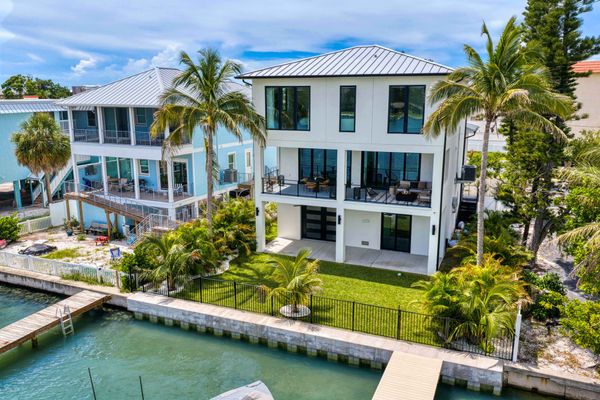
Two homes can both carry the waterfront label and have dramatically different values. One may sit on a narrow canal with limited visibility. The other may have wide-open views stretching across Boca Ciega Bay.
Both technically have water behind them. Only one delivers the view buyers are actually paying for.
Waterfront value isn’t just about having water. It’s about what that water looks like when you’re sitting on the dock at sunset — and whether it’s “wow, look at that” or “well… technically that’s water.”
What Is Sailboat Water and Why Does It Affect Home Value?
Sailboat water means a vessel can reach open water without passing under any fixed bridges. Even buyers who don’t own sailboats frequently pay a premium for it.
Why? Sailboat water typically means better boating access, fewer routing restrictions, higher buyer demand, and stronger long-term resale value. Two homes can sit just blocks apart while one offers unrestricted Gulf access and the other requires navigating under multiple bridges. That difference alone can move the price by tens of thousands of dollars.
How Much Does Water Depth Affect a Waterfront Property’s Value?
Significantly — especially for buyers who boat.
The first question serious boaters ask is how much water is available at low tide. A home may have a dock, but if the depth is too shallow for the buyer’s vessel, that dock loses much of its value. Some buyers eliminate properties immediately on this factor alone.
Aerial photography doesn’t tell you water depth. Google Earth won’t tell you whether your boat is about to become a very expensive lawn ornament. This is one of the clearest examples of why waterfront real estate requires local knowledge.
How Much Does Seawall Replacement Cost in Florida?
This is one of the most overlooked cost factors in waterfront real estate.
Two homes can look identical from the street. One has a seawall with decades of useful life remaining. The other needs replacement. Depending on linear footage, engineering requirements, materials, and permitting, seawall replacement in Florida typically runs $30,000 to $100,000 or more.
That potential liability is rarely reflected in an automated valuation — but it’s something a knowledgeable agent will catch before you’re under contract.
What Makes a Dock Add Value to a Waterfront Home?
Not all docks are equal. When evaluating a dock, the key questions are:
• Is the dock permitted?
• What condition is it in?
• Is there a lift, and what size boat does it accommodate?
• Does it have power and water connections?
• When was it last maintained?
A well-designed, properly permitted dock and lift system can add substantial value and convenience. A neglected dock is a future expense. An unpermitted dock can create legal complications at closing.
How Do Views Affect Waterfront Home Prices?
More than most buyers expect — and in ways that are hard to quantify until you’ve seen it play out repeatedly.
A home may technically have waterfront exposure, but the view itself varies widely. Open water. A mangrove preserve. A neighboring seawall. A marina. A large yacht permanently parked next door.
Protected mangroves often cannot be removed, even if they partially block the water view. Pie-shaped lots may have a narrow waterfront footprint compared to neighboring properties. Buyer emotion is real, and buyer emotion drives prices. In some cases, the most valuable feature on the property isn’t the house — it’s what you see when you walk into the living room.
What Is Boat Wake and Wind Exposure and Why Does It Matter?
This almost never appears in listings, but it matters for both maintenance costs and everyday enjoyment.
Some waterfront locations are naturally sheltered. Others take a consistent beating from boat traffic, prevailing wind, and wave action. That exposure accelerates dock wear, increases lift maintenance frequency, shortens seawall lifespan, and affects how comfortable it is to actually use the water on a daily basis.
Buyers who spend time on the water usually recognize this immediately. First-time waterfront buyers typically don’t — until after closing.
The Bottom Line: What Actually Drives Waterfront Home Values?
When two waterfront homes on the same street sell for $300,000 apart, the gap almost always comes down to water depth, sailboat access, view quality, dock condition, seawall remaining life, and boating convenience.
None of those factors show up reliably in an automated valuation. All of them have a significant impact on both price and lifestyle.
That’s what makes waterfront real estate different — and why the old phrase “location, location, location” sometimes becomes “water, water, water.”
More Waterfront Buyer Resources
Many of the factors that create large price differences between waterfront homes deserve a closer look. If you're researching waterfront property in St. Petersburg, these articles may help:
- What Is Sailboat Water and Why Do Waterfront Buyers Care So Much?
- What to Know About Boat Lifts Before You Buy Waterfront in St. Petersburg
- What Does a Seawall Inspection Cost in Pinellas County?
- What Does Waterfront Home Insurance Cost in Florida After the Hurricanes?
- The Waterfront Rule That Turned a House Into a Lot — how the 50% Rule decides renovate vs. rebuild
More Questions Buyers Ask
Why do two waterfront homes on the same street sell for different prices?
Boating access, canal depth at low tide, bridge restrictions, seawall condition, lot and turning room, and storm and flood history all vary house to house — and each moves the price.
Does boat access really change a waterfront home's value?
Yes. Deep water with no fixed bridges and fast Gulf access commands a clear premium over a shallow, tide-restricted canal, even on the same street.
How do I find an agent who can price waterfront accurately?
Look for someone who lives on the water and actually runs a boat. The things that decide a waterfront deal — canal depth at mean low tide, bridge clearance, seawall age, flood history by block — are not on the MLS sheet. Carly Majorana is a waterfront and luxury specialist at NextHome Gulf Coast and a CLHMS Guild Member serving St. Pete Beach, Tierra Verde, Treasure Island, and greater Pinellas County.