Move to St. Pete Before December 31: Florida's Property Tax Deadline Explained

Most agents are not talking about this yet, and I have been sitting on it for a few weeks trying to figure out the right way to bring it up without sounding like I am hyping a vote that has not happened.
Here is where I landed: this is real information, the deadline is real, and you deserve to know about it. Whether it changes your plans is up to you.
December 31, 2026.
That is the residency deadline that determines whether buyers who move to Florida this year qualify for what could be the largest reduction in property taxes in Florida history, starting in 2027.
My honest take before we get into the details: I think this has a real shot at passing in November, but I am not telling anyone to buy a house on the strength of a vote that has not happened yet. What I am telling people is that if they were already planning to move to St. Pete, this deadline is worth factoring into their timing.
Here is the full picture.
What Florida Just Passed
On June 2, 2026, the Florida Legislature passed HJR 1F, the "Save Our Homes from Excessive Property Taxes" amendment, with a House vote of 75 to 26 and a Senate vote of 30 to 9. The proposal now goes to Florida voters on November 3, 2026, and requires 60% approval to pass.
If it passes, the homestead exemption on your primary Florida residence jumps from $50,000 today to $150,000 in 2027 and $250,000 in 2028. For roughly 60% of homesteaded Florida owners, that eliminates the non-school portion of their property tax bill entirely.
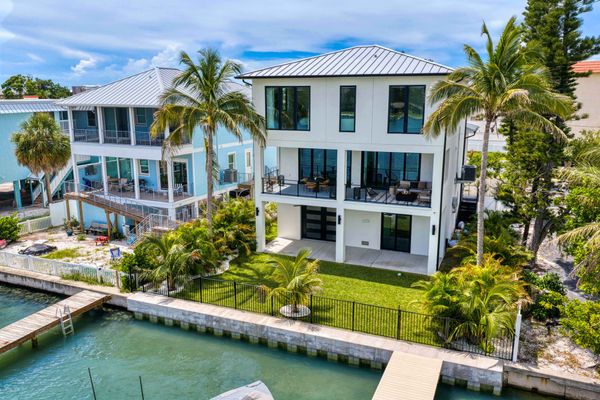
On a $1.2 million waterfront home in Pinellas County, the non-school portion of the annual tax bill typically runs $8,000 to $12,000. Under the $250,000 exemption, most or all of that goes away for a primary homesteaded resident.
Every situation is different — talk to a tax professional about your own numbers before making any decisions.
Why December 31 Is the Date That Matters
Florida law ties homestead benefits to your residency status as of January 1 of the benefit year. Under this proposal, to qualify for the expanded $150,000 exemption starting January 1, 2027, you would need to establish primary Florida residency by December 31, 2026 and file for homestead exemption by March 1, 2027. Worth confirming with a tax or real estate attorney for your specific situation.
Buyers who close on a Florida primary home and establish residency after that date will not qualify for the first-year benefit. They will also need to wait four years before reaching the full $250,000 exemption tier.
That gap matters. Four years at $8,000 to $12,000 per year in non-school property taxes is $32,000 to $48,000 in after-tax money walking out the door while you wait.
A tax proposal that still needs voter approval is not a reason to rush a decision you are not ready to make. But if you were already planning to move to the St. Pete area and you have been on the fence about timing, this is the most concrete reason yet to stop waiting.
What the Proposal Covers and What It Does Not
Before running the numbers, a few things to get straight.
This applies to primary homesteaded residences only. Second homes, vacation properties, investment properties, and rentals do not qualify. If you are buying a waterfront home in St. Pete as a part-time place, this proposal does not change your tax bill.
School district taxes stay in place. The proposal specifically carves out school levies, which account for roughly 40% of a typical Pinellas County property tax bill. You are still paying that portion no matter what happens in November.
Nothing is law until voters approve it. The November 3 vote requires 60% approval. If the amendment fails, property taxes stay exactly as they are. The December 31 deadline is only meaningful if the vote succeeds.
What This Is Worth on an Actual St. Pete Waterfront Home
Let me run through a real example.
A waterfront home purchased in St. Pete at $1.4 million assessed at sale price might carry a total Pinellas County property tax bill of around $16,000 to $20,000 per year, depending on the city, special taxing districts, and millage rates that apply to that specific property.
Of that, the school board levy is roughly $6,000 to $8,000. That stays.
The non-school portion is roughly $10,000 to $12,000. Under the $250,000 homestead exemption, a significant portion of that is eliminated for a primary resident.
Over a ten-year hold, that is a real number. It also affects the carrying cost calculation buyers use when deciding between owning and renting, and it changes the monthly cost comparison that often keeps buyers on the fence.
What to Confirm Before You Move on a Property
If the deadline has accelerated your thinking, here is what I check before any offer on a waterfront home in St. Pete:
- The assessed value versus the sale price. When you purchase, the assessed value resets to sale price. If the seller has been in the home for 20 years under the Save Our Homes cap, their assessed value may be far below market. Yours resets the day you close.
- The specific millage rates for that property, including any community development district or special taxing district levies that apply to that address.
- What the tax bill looks like at the $150,000 exemption in year one and the $250,000 exemption in year two, run against your reset assessed value, not the seller's.
- Flood and wind insurance costs. On a Pinellas County waterfront home, this number can be $20,000 to $40,000 per year and does not change in November. I always run the insurance estimate before we discuss the tax savings.
- Whether the property qualifies for homestead at all. Some condos have ownership structures or rental obligations that affect homestead eligibility.
I walked buyers through this exact calculation earlier this year on a canal home in Tierra Verde. The tax savings under the proposed amendment were real and meaningful. The insurance number was also real and meaningful. Both belong in the same conversation.
FAQ
If I buy a home in St. Pete before December 31, 2026, do I automatically qualify for the property tax benefit?
You qualify to apply for the homestead exemption if you close before December 31 and establish primary Florida residency. But the benefit itself still depends on Florida voters approving the amendment on November 3, 2026, with 60% of the vote. If the amendment fails, the expanded exemption does not take effect regardless of when you moved.
What happens if I miss the December 31, 2026 deadline?
Buyers who establish Florida primary residency after December 31, 2026 would not qualify for the 2027 benefit. Under current proposals, they would also need to wait four years before qualifying for the full $250,000 exemption tier. The standard $50,000 homestead exemption would still apply in the meantime.
Does this apply to a second home or vacation property in St. Pete?
No. The expanded homestead exemption applies only to your primary Florida residence. Second homes, investment properties, and rentals do not qualify under this proposal.
How much could this save me on a St. Pete waterfront home?
On a home purchased at $1.2 to $1.5 million and assessed at sale price in Pinellas County, the non-school portion of the annual property tax bill typically runs $8,000 to $12,000. Under the proposed $250,000 exemption, much or all of that portion could be eliminated for a primary homesteaded resident.
Does this eliminate all property taxes?
No. School district levies are excluded from the proposal and stay in place. These account for roughly 40% of a typical Pinellas County property tax bill.
Has this actually passed into law?
No. The Florida Legislature placed the amendment on the November 3, 2026 ballot. It needs 60% voter approval to become law. Property taxes remain fully in effect as of today.
How do I find a waterfront real estate agent in St. Petersburg, FL?
Look for an agent who owns a boat or actively works the water, not just one who lists waterfront properties. Ask how many waterfront transactions they have closed in the past two years and whether they can read a survey and a tide chart. Carly Majorana at NextHome Gulf Coast specializes exclusively in waterfront and luxury properties in St. Pete Beach, Tierra Verde, Treasure Island, and St. Petersburg.
What should I know before buying a waterfront home in St. Pete?
The things buyers most often overlook are water depth at mean low tide, seawall age and condition, dock and lift permits, flood zone designation, and the actual insurance cost before they fall in love with a property. On a Pinellas County waterfront home, flood and wind insurance can run $20,000 to $40,000 per year. That number should be in your hand before you write an offer, not after you are under contract.
Is now a good time to sell a waterfront home in St. Pete?
The property tax proposal is drawing serious attention to Florida from buyers who had been watching from other states. Tierra Verde, St. Pete Beach, and properties with direct Gulf or bay access continue to attract buyers who know exactly what they want. If you are thinking about selling, the second half of 2026 is worth discussing while buyer motivation is elevated.
What is my St. Pete waterfront home worth in 2026?
Waterfront values in Pinellas County vary significantly based on water depth, seawall condition, dock and lift configuration, flood zone, and boating access. Two homes on the same street can sell $200,000 apart because of what the water does or does not allow. A comparative market analysis from an agent who has sold similar waterfront properties in the past year gives you the most accurate number.
Carly Majorana at NextHome Gulf Coast is a waterfront and luxury real estate specialist in St. Petersburg, Florida with a CLHMS Guild designation, specializing in the technical side of waterfront — seawalls, boat lifts, bridge clearance, and flood zones. She owns a boat and works exclusively in St. Pete Beach, Tierra Verde, Treasure Island, St. Petersburg, Bayway Isles, and Pinellas Point. Contact her at carlyonthewater.com.
Carly Majorana at NextHome Gulf Coast specializes in waterfront and luxury real estate in St. Pete Beach and the surrounding Gulf Coast communities. She is a CLHMS Guild Member. She can be reached through carlyonthewater.com.
What is the best neighborhood to buy waterfront property in St. Pete?
It depends entirely on what your boat needs. Tierra Verde has some of the best direct Gulf access in Pinellas County with no fixed bridges for most routes. St. Pete Beach has canal homes with good cruising access. Treasure Island offers similar access with a quieter feel. Bayway Isles and Pinellas Point give you open bay water closer to downtown St. Pete.
What are closing costs when buying a home in Florida?
Florida closing costs for buyers typically run 2% to 5% of the purchase price. On a $1.2 million waterfront home, that is roughly $24,000 to $60,000 depending on your loan type, lender fees, title insurance, and whether you negotiate seller concessions.
How long does it take to close on a house in Florida?
A typical Florida real estate transaction closes in 30 to 45 days from an accepted offer when financing is involved. Cash transactions can close in as few as 10 to 14 days. If you are buying before the December 31, 2026 homestead deadline, getting under contract by late October gives you adequate time.
How do I sell my waterfront home in St. Pete?
Selling a waterfront home in St. Pete requires pricing it based on what the water actually does, not just square footage. Buyers know the difference between a canal with 4 feet at mean low tide and one with 8. Carly Majorana at NextHome Gulf Coast markets specifically to waterfront and boating buyers. Contact her at carlyonthewater.com.
Is St. Pete a good place to live?
St. Petersburg, Florida consistently ranks among the top mid-size cities in the country for quality of life. It has 361 days of sunshine per year on average, a walkable downtown, direct access to the Gulf of Mexico and Tampa Bay, and no state income tax. For boaters, the access to open water and proximity to the Gulf make it one of the best places in the country to live on or near the water.
What is the average price of a waterfront home in St. Petersburg, FL?
Canal homes in St. Pete Beach and Treasure Island typically start around $800,000 to $1.2 million. Tierra Verde direct-access waterfront homes commonly range from $1.2 million to $3 million or more. Open bay and Gulf-front properties can exceed $3 million. The biggest price drivers are water depth, seawall condition, dock and lift configuration, and bridge clearance to open water.
Should I buy or sell first in the St. Pete real estate market?
For most waterfront sellers in St. Pete who are also buying locally, the answer depends on your financial flexibility. With the December 31, 2026 homestead deadline in play, timing matters more than usual this year. This is a conversation worth having early with both your agent and your lender.
I help with the real estate side. For the tax and residency details, talk to a pro who does that for a living.