How to Find the Best Waterfront Realtor in St. Pete
Every agent online is the best waterfront agent. Here's what they should actually know, so you can check.

About the Author
Carly Majorana
Waterfront and luxury real estate specialist at NextHome Gulf Coast in St. Petersburg, Florida. CLHMS Guild Member. Specializing in the technical side of waterfront — seawalls, boat lifts, bridge clearance, and flood zones. Serving buyers and sellers in St. Pete Beach, Tierra Verde, Treasure Island, St. Petersburg, Bayway Isles, and Pinellas Point.
Google "best waterfront Realtor in St. Pete" and you get a lot of agents who are extremely confident about it. A few of them wrote the page themselves.
I'm not going to do that. I'll tell you what a waterfront agent should actually know, and you can hold whoever you want up against it. Me included.
A waterfront house is two purchases
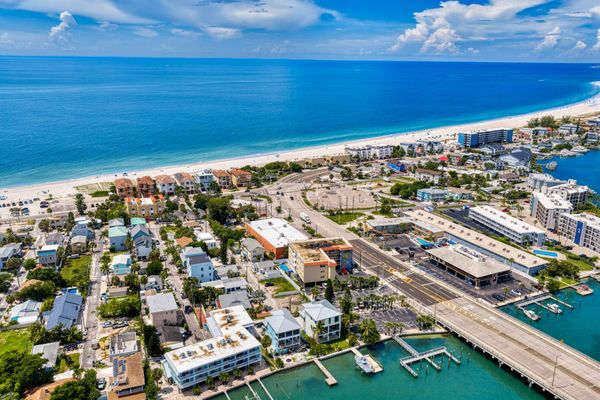
You're buying the house. You're also buying everything between the house and open water. On a canal that's the seawall, the dock, the lift, how deep it is at low tide, how many bridges sit between you and the Gulf, and whatever permits are or aren't on all of it. On the Gulf it's the dune, the beach in front of you, a state construction line, and a flood zone that assumes waves.
None of that is in the listing photos. All of it is where people lose money.
An agent who mostly sells inland can handle the house part fine. Honestly most of them can. It's the second part. You can't learn tides from a listing.
Things your agent should just know
These aren't questions to grill anyone with. It's stuff that should come up on its own, and if it never does, that tells you something.
- Water depth at the dock at mean low tide. Not what the listing says. The listing always says deep water. If it looks low, you go back at actual low tide with a measuring stick and compare it to the draft of your boat. The boat you have, not the one you might buy someday.
- How many fixed bridges are between the house and open water, and the clearance on each one. If "fixed bridge" doesn't make your agent immediately think about your T-top, they haven't been under one in a boat.
- Who looks at the seawall. A structural engineer. One with no stake in the repair work. Home inspectors are not qualified to call a seawall, and the good ones will tell you that themselves.
- Whether the lift can actually carry your boat. Wet, fueled, with the gear on it. The rated capacity on a lift is a real number and people treat it like a suggestion.
- The flood zone, and whether there's an elevation certificate. This decides your insurance more than almost anything else about the house.
- If it's Gulf-front, a whole different list. Where the house sits relative to the Coastal Construction Control Line, whether it's in a VE zone, and whether the owner signed the county's renourishment easement. Gulf-front isn't canal-front with a better view. It's a different purchase with state permits, wave-action flood rules and sand that only stays if the county keeps bringing it. If your agent only talks docks, that's a gap.
The question nobody asks
Tampa Bay or Boca Ciega Bay.
Nobody asks it because nobody knows it's a question. Most buyers hear "waterfront in St. Pete" and picture one thing. There are two, and they're for different people.
Tampa Bay side is for people who want a waterfront house more than they want a boat. You're closer to downtown, closer to everything, and it feels more like a neighborhood than an island. You can still run a boat, and the inshore fishing up there is good. But from most of those canals it's 20 to 25 minutes of running before you see the Gulf, and the water isn't as pretty.
Boca Ciega is the boat side. Prettier water, and from a lot of it you're in the Gulf in 5 to 10 minutes. That's the difference between going fishing on a Tuesday after work and not.
Neither one is wrong. But if your agent hasn't asked which bay you want before pulling listings, they're showing you houses, not a life.
Red flags
"Sometimes you just wait a few minutes for the tide." With a 20-foot skiff, sure. With a 34-foot center console, that's a house you can't leave for half the day.
"It's boat-ready." For which boat.
Pricing by the street. A pie-shaped lot with 25 feet of actual frontage gets priced like 80 feet of usable dock constantly, and buyers pay it. Two houses on the same street are not the same number. Here's why.
They've never been on the water behind the house. You'd be surprised.
Most agents learn about bridge clearance the same way boat owners learn about their lower unit.
What catching it looks like
I was the buyer's agent on a $2.2 million waterfront house in St. Pete. The listing said the seawall was in good condition. My structural engineer said it was at the end of its useful life.
My buyers got a $50,000 credit.
I want to be honest, that's not every deal. A lot of the time a tired seawall is already baked into the price and everyone at the table knows it. This one wasn't. Without the engineer they'd have paid full price for a wall that was done.
It goes the other way too. I watched a listing sit for months because the agent priced it off comps that had more waterfront footage, a new dock and a new seawall. The house they were selling had none of that. On paper, same street, same size, same number. On the water, not close. So it sat, and every month it sat the number looked worse.
That's not a bad agent. That's an agent who priced a waterfront house like a regular house.
Permits are the other one. When I built my house I wanted to move our dock about five feet so it would be centered on the lot. The Army Corps said no, because seagrass. There is visibly more seagrass on the side they made us build on. We built where they said. If you're buying a house planning to redesign the dock, your agent should know going in that permitting on the water is not logical.
Does your agent need a boat
Technically no.
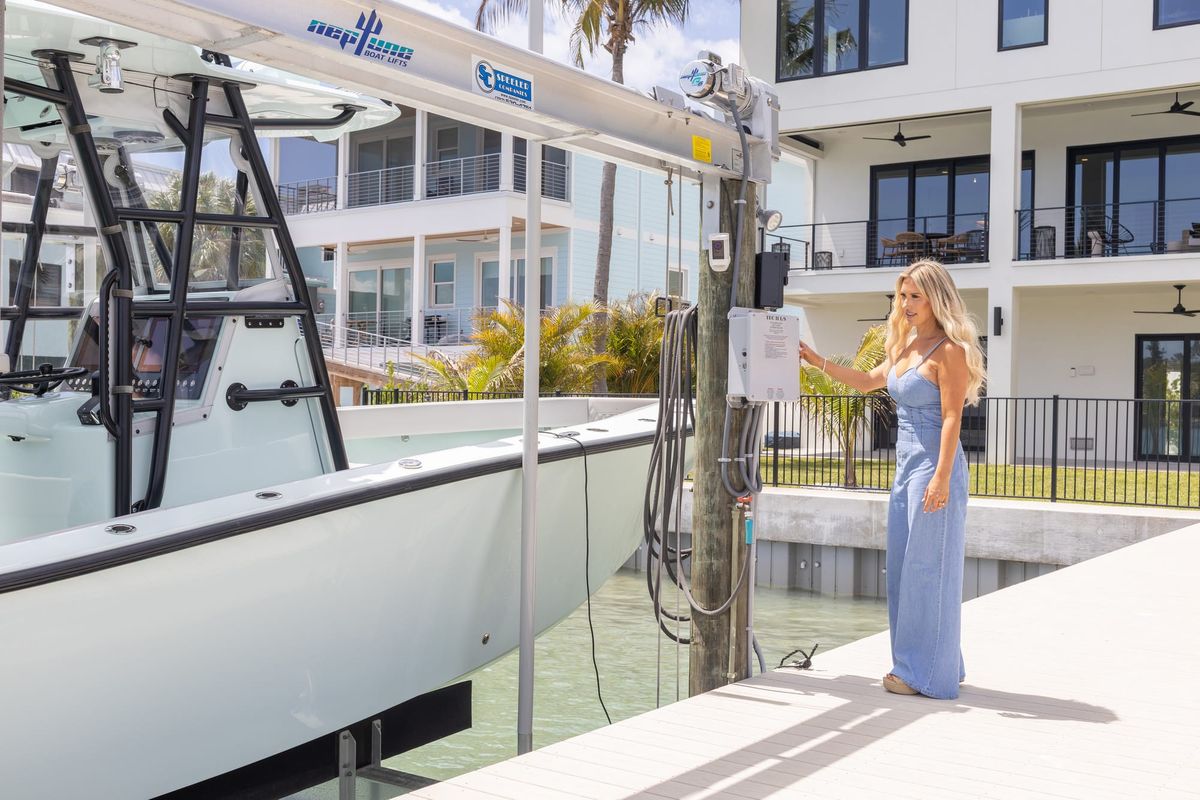
But I live on the water and keep a 30-foot center console on a lift behind the house, and there's a difference between knowing what mean low tide means and having planned your whole Saturday around it.
It's also why I show houses by boat when it makes sense. You see the canal, the way out, the neighbors' docks, how far it really is to open water. It's a different house from the water.
Most of my clients didn't find me through a search. A lot of them walked into an open house I was holding on the water, asked a normal question about the seawall, and got an answer about hydrostatic pressure and weep holes. Not because I was trying to impress anyone. That's just what the answer is. And somewhere in there they decided I was the one.
What to look for
- Someone who works both sides of the island. Canal and Gulf-front are different purchases, and plenty of agents only really know one.
- A team behind them. Structural engineer, marine contractor, an insurance agent who actually writes flood.
- Someone who asks about your boat before they show you a single dock.
The best waterfront Realtor is whoever notices the thing you didn't know to ask about. That's it. The rest is marketing.
FAQ
How do I find a good waterfront real estate agent in St. Pete?
Look for someone who can explain water depth at low tide and bridge clearance without googling, and who knows the difference between a canal-front and a Gulf-front purchase.
What should a waterfront Realtor know?
Depth at mean low tide, fixed bridges and clearance, who inspects a seawall, lift capacity for your boat, flood zone and elevation certificate, and for Gulf-front, the CCCL, VE zones and renourishment easements.
Does a waterfront Realtor need to own a boat?
No. But an agent who boats knows what tides, bridges and docks mean day to day, and that's hard to learn from a listing.
Is it worth hiring a waterfront specialist instead of a regular agent?
If you're buying for the boat or the water, yes. Seawall, dock, lift and depth problems are where buyers lose the most money, and a specialist knows to look.
Who should inspect a seawall before I buy?
A structural engineer with no stake in the repair work. A standard home inspection doesn't cover it.