No Fixed Bridges: What It Means for Your Boat and Your Home's Value
"No fixed bridges" is the most valuable phrase in a waterfront listing — and the most misused. What it means for your boat, your Gulf access, and your home's value in Pinellas County.
More Questions Buyers Ask
What does "no fixed bridges" mean in a waterfront listing?
It means nothing between your dock and open water forces a height limit — no non-opening bridge in the way. That lets taller boats reach the Gulf without an air-draft ceiling.
Why does "no fixed bridges" raise a home's value?
Removing the height limit opens the property to larger and taller boats and a wider pool of boating buyers, which commands a premium over a comparable home stuck behind a fixed bridge.
How do I verify a "no fixed bridges" claim before buying?
Look for someone who lives on the water and actually runs a boat. The things that decide a waterfront deal — canal depth at mean low tide, bridge clearance, seawall age, flood history by block — are not on the MLS sheet. Carly Majorana is a waterfront and luxury specialist at NextHome Gulf Coast and a CLHMS Guild Member serving St. Pete Beach, Tierra Verde, Treasure Island, and greater Pinellas County.

About the Author
Carly Majorana
Waterfront and luxury real estate specialist at NextHome Gulf Coast in St. Petersburg, Florida. CLHMS Guild Member. Specializing in the technical side of waterfront — seawalls, boat lifts, bridge clearance, and flood zones. Serving buyers and sellers in St. Pete Beach, Tierra Verde, Treasure Island, St. Petersburg, Bayway Isles, and Pinellas Point.
"No fixed bridges" might be the most valuable phrase in a Pinellas County waterfront listing. It's also one of the most carelessly used.
Here's the thing most buyers don't realize until it's too late: a fixed bridge is the one boating limitation on a property that you can never, ever change. You can dredge a shallow canal. You can rebuild a seawall. You can swap a too-small lift. But a concrete bridge between your dock and the open Gulf? That's permanent. It sets a hard ceiling on the size and type of boat you'll ever run from that house, for as long as you own it.
So when a home genuinely has no fixed bridges to open water, that's not a marketing line. That's a feature that adds real, lasting value. And when a listing says it but the route tells a different story, that's exactly the kind of thing I catch before you write an offer.
What "no fixed bridges" actually means
It means your boat can travel from your dock all the way to open water without passing under a bridge that doesn't open. (For the full definition and how it ties into sailboat water, I broke that down separately.)
People hear "bridges" and picture sailboats with tall masts. But this matters just as much for powerboats. If you run a center console with a tower, a bay boat with a T-top, a sportfish with a hardtop and outriggers, or anything with height above the waterline, a low fixed bridge can trap your boat in the canal just as easily as it traps a sailboat.
Why a fixed bridge quietly caps your home's value
Two near-identical homes, same street, same dock, same price on paper, but one has a clear shot to the Gulf and the other has a 14-foot fixed bridge between it and open water. To a boating buyer, those are not the same property, and they will not sell for the same number. The one with unobstructed access commands a premium, and it holds that premium at resale because the next buyer is doing the same math.
That's the part automated valuations and listing photos completely miss. An algorithm sees two waterfront homes. A boater sees one house they can actually use and one they can't.
What I check before I let you call it "no fixed bridges"
When a buyer wants the real answer, I don't take the listing's word for it. I trace the actual route from the dock to open water and check:
- Every bridge on the path — fixed or not. One low fixed bridge anywhere on the route is all it takes.
- Clearance at high tide, not low. High tide is when your boat sits highest and the bridge sits lowest — that's the number that actually limits you.
- Your boat's true height — tower, T-top, hardtop, antennas, outriggers up. Not the bare hull.
- How long the run actually is — a clear route that takes 40 idle minutes to the Gulf is a different lifestyle than a 10-minute one.
- Whether the "open water" it reaches is the water you want — bay vs. true Gulf access aren't the same for an offshore boat.
A lift is easy to replace. A bridge isn't. That's the whole reason this one check is worth more than almost any other on a waterfront tour.
The "it said no fixed bridges" story
I walked a buyer through a home that checked every box on paper — deep canal, newer dock, the listing proudly said "no fixed bridges, direct Gulf access." Beautiful. Then we actually traced the route. There was a fixed bridge two turns out that the listing simply didn't mention, and his boat — a center console with a tower — wasn't clearing it at high tide. "No fixed bridges" had quietly meant "no fixed bridges if you ignore the one between you and the Gulf."
He didn't buy it. He bought a less flashy home a few canals over with a genuinely clear run, and he's never once thought about it since. That's the entire point: the phrase is only worth something if it's actually true for your boat.
Where to find genuine no-fixed-bridge access in Pinellas
Some communities are simply built for it. Tierra Verde is the one serious boaters ask about most — many of its canals were engineered for larger-vessel access with fast, unobstructed Gulf routes. But "no fixed bridges" isn't a whole-neighborhood guarantee anywhere; it's a street-by-street, dock-by-dock reality. Two homes a block apart can have completely different answers, which is exactly why waterfront homes on the same street sell for so differently.
If unobstructed Gulf access is the reason you're buying waterfront at all, it should be the first thing you verify, not the last. It's one of the six things I check on every waterfront home before an offer (the rest are in my St. Pete Beach buyer's guide and the "can my boat fit here" breakdown).
Frequently Asked Questions
What does "no fixed bridges" mean in a waterfront listing?
It means a boat can travel from the property's dock to open water without passing under a bridge that doesn't open. It's prized because a fixed bridge permanently limits the height, and therefore the size and type, of boat you can run from that home.
Do fixed bridges only matter for sailboats?
No. Powerboats with towers, T-tops, hardtops, or outriggers can be just as limited by a low fixed bridge as a sailboat's mast. Bridge clearance matters for almost any boat with height above the waterline.
Does "no fixed bridges" actually add to a home's value?
Yes. To boating buyers, unobstructed Gulf access is a lasting premium that holds at resale, because the next buyer values it the same way. Two otherwise-identical homes can sell for meaningfully different prices based on this alone.
How do I verify a listing's "no fixed bridges" claim?
Trace the full route from the dock to open water and check every bridge on it, measure clearance at high tide (not low), and compare it to your boat's true height with the tower or hardtop up.
Which Pinellas areas are known for no-fixed-bridge access?
Tierra Verde is the community serious boaters ask about most for fast, unobstructed Gulf access, but it varies dock-by-dock everywhere and should always be verified for the specific property.
About the Author
Carly Majorana
Waterfront and luxury real estate specialist at NextHome Gulf Coast in St. Petersburg, Florida. CLHMS Guild Member. Specializing in the technical side of waterfront — seawalls, boat lifts, bridge clearance, and flood zones. Serving buyers and sellers in St. Pete Beach, Tierra Verde, Treasure Island, St. Petersburg, Bayway Isles, and Pinellas Point.
Read more
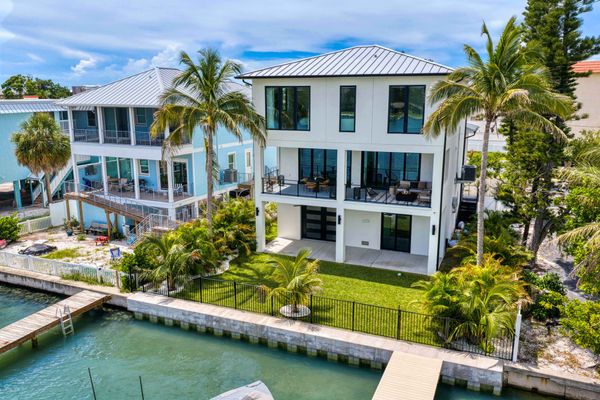
How to Sell a Waterfront Home in St. Pete (Seller's Guide)
You hire an agent who's good at houses. The water is a different job. What the person selling your waterfront home in St. Pete needs to already know.
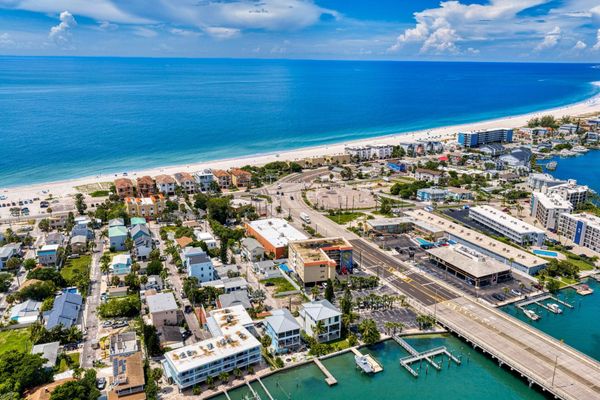
What Your Waterfront Home Is Actually Worth in St. Pete
You looked up your house on Zillow. The number is wrong. What actually sets the price on a waterfront home in St. Pete, from someone who prices them.
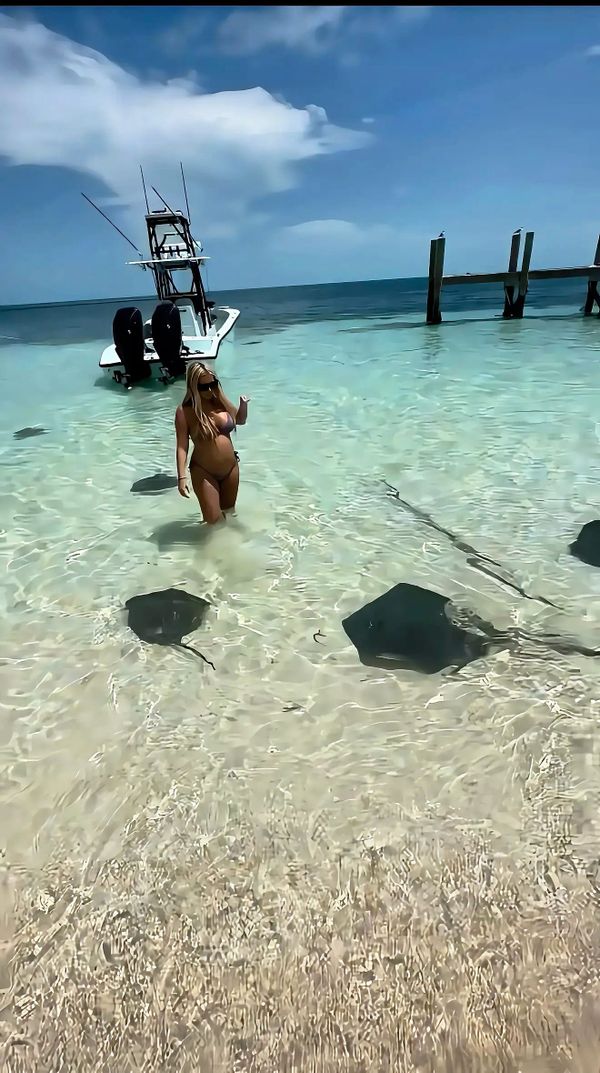
Moving From California to St. Pete for the Boat Life
She messaged me on Facebook about moving from California. A year and a half, 20 houses and two hurricanes later, she pulled up next to me at the sandbar in her own boat.
Treasure Island vs. St. Pete Beach, to Actually Live In
I thought St. Pete Beach was the goal. We bought on Treasure Island because the lot was cheaper. What is different about living on each one, from someone who does.